Sunday, May 07, 2006

Joshua Tree National Park


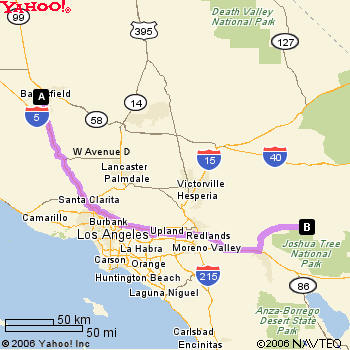
I took a drive to Joshua Tree National Park on Friday, May 5th, feeling like it would be one of my last opportunities this year to see the wildflowers. Plus, I had checked the weather and it was going to be in the low to mid 80's, so I figured it would be a good day to go exploring the park. I had never been there before, so I printed up some maps to the park and set off at 9:30 that morning.

It took about 4 hours to get there. With the LA traffic and some road work going on, there were some traffic delays. I arrived at the gate around 1:30. It was a sunny day and warm, but not really hot, with clear skies. Going through the entire LA area, it was very smoggy, so I was worried it would be smoggy in the park too, but it wasn't. It was typically breezy, as the desert tends to be. I entered the park through Joshua Tree Village. There are also entrances at Twentynine Palms and at Cottonwood Spring, which is 25 miles east of Indio. The visitor center is located at Cottonwood Spring, so if you want to go to the visitor center, it would be best to enter there. When I got to Cottonwood Spring, it was after 6 pm, and the visitor center closes at 4 pm. The cost to get into the park is $15 and it is good for 7 days. I have an Annual National Parks Pass which costs $50 annually, and it allows you to enter any national park, national monument or national preserve for an entire year, as many times as you wish. If you plan on doing a lot of trips to national parks, it is a good deal. You can get one at any national park or you can purchase it online HERE.

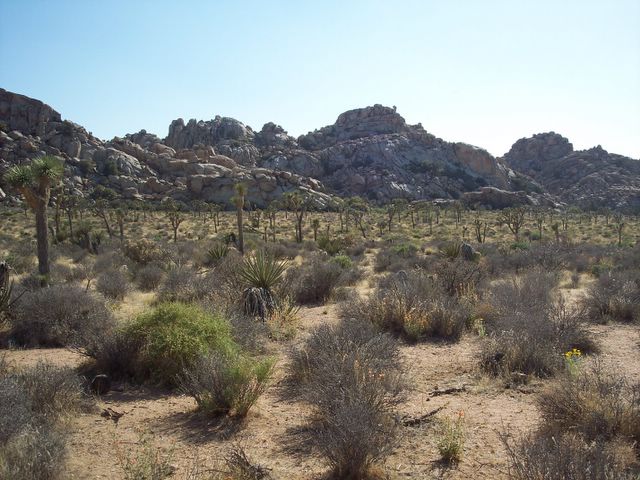
Joshua Tree National Park is a very large park. It covers some 800,000 acres, and two separate deserts, the Colorado Desert and the Mojave Desert, come together in the park.

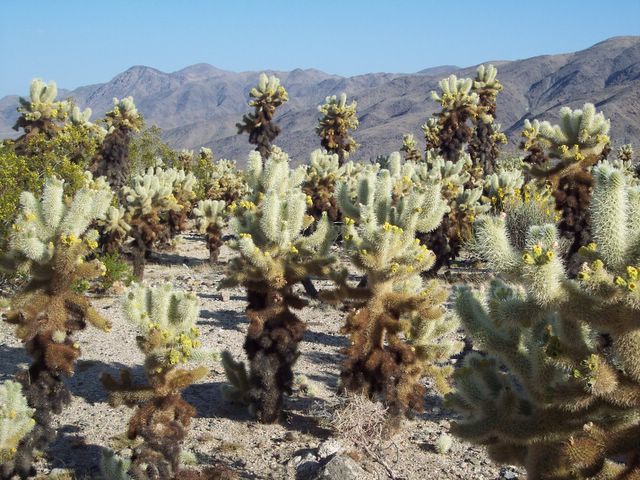
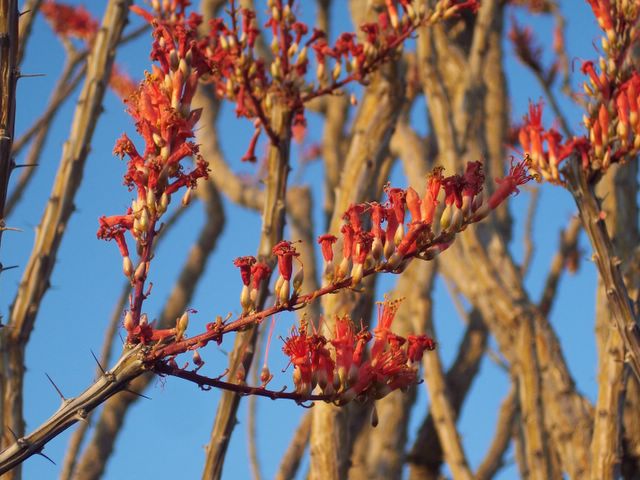
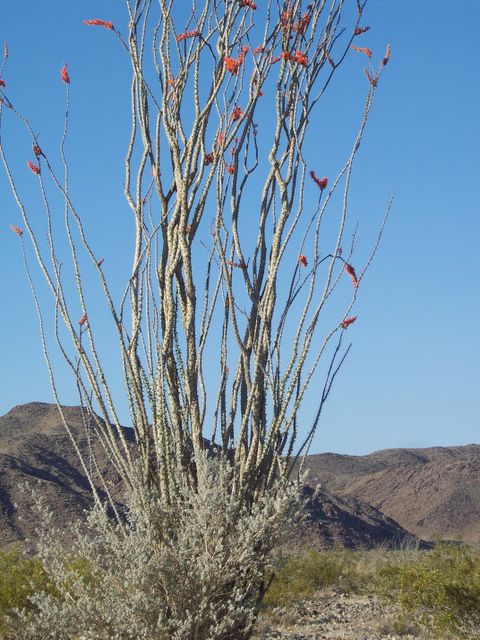
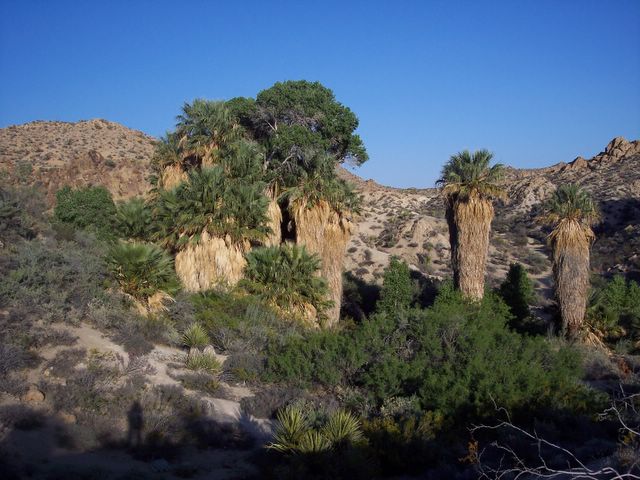
The Colorado Desert is considered a low desert (below 3000 feet), and occupies the eastern half of the park. It is slightly warmer than the higher desert. Very few Joshua Trees inhabit this part of the park. In this part of the park, you see a lot of cactus and creosote bush. There is a "Cholla Garden" in this part of the park. There is a pathway you can walk through here. Be careful though...the cactus are very sharp. Also in this part of the park, there are some interesting looking plants called Ocotillo. These are tall plants with bright red flowers. There is a Ocotillo Patch where several of these plants grow. Also in this part of the park, there is Cottonwood Spring, one of several fan palm oases that occur in the park. In these oases, naturally occurring water springs can be found. These springs are extremely important to the desert plant and animal life.

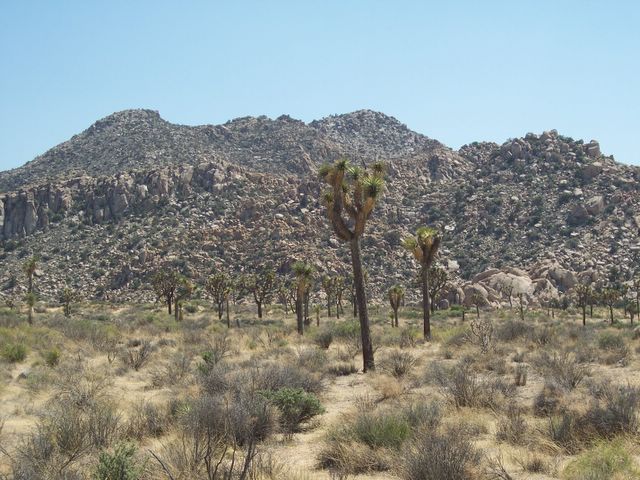
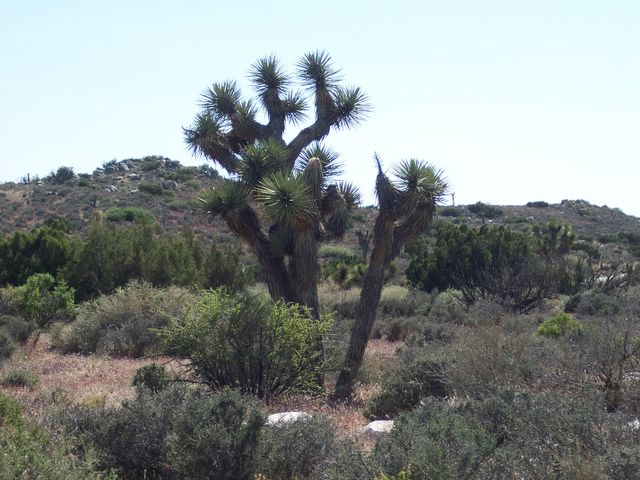
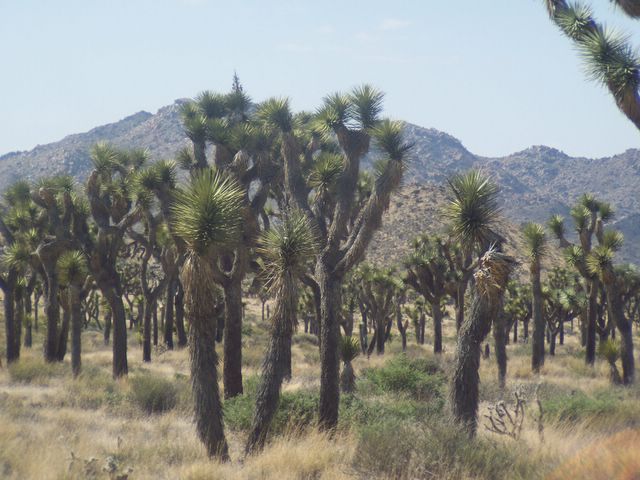
The higher Mojave Desert, which occupies the western half of the park, is the home of the Joshua Tree, for which the park is named. The trees grow in abundance here, making some parts look more like a forest than a desert. According to legend, Mormon pioneers thought the limbs of the Joshua Tree looked like the outstretched arms of Joshua, leading them to the promised land. Other people were not so impressed by the tree. John Fremont, an early explorer, thought the Joshua Tree was the ugliest tree in the plant kingdom. Joshua Trees are found only in North America, and only in the states of California, Arizona Utah and Nevada.

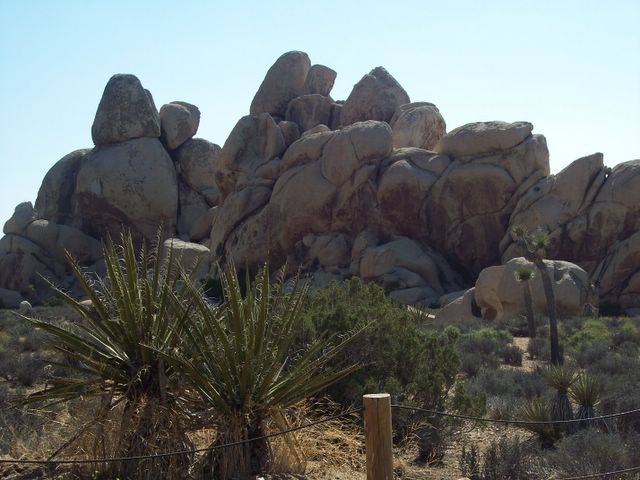
Also found in the park, are what seems like a neverending array of rock formations. In fact, the park is a favorite of rock climbers. Some interesting rock formations can be seen at places called "Wonderland of Rocks," "Jumbo Rocks," and "Cap Rock." Many of the campgrounds are also situated among rock formations, which provide shelter against the wind, and shade from the desert sun. Due to erosion from wind and from flash floods, the rocks take on strange and interesting shapes.

At first glance, the park seems without much animal life. It is a desert, so many animals are nocturnal. But if you look closely, you can see many animals and birds which make this place their home. Animals such as desert bighorn sheep, coyotes, kit fox, mule deer, rattlesnakes, lizards, and even toads can be seen in the park.
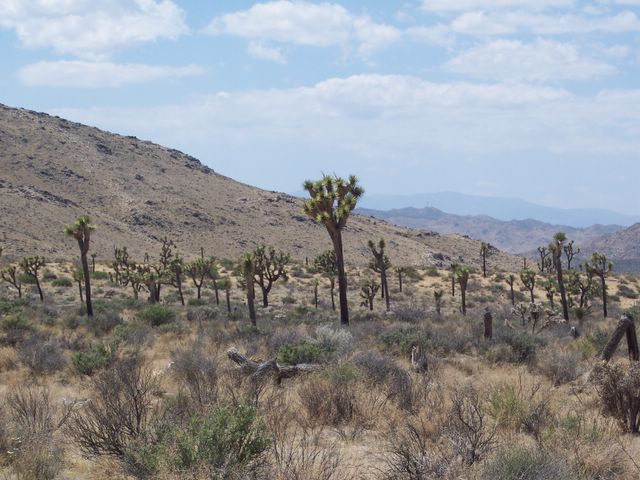


There are many things to do in Joshua Tree National Park, whether you want to go rock climbing or camping or hiking, or just want to go sight-seeing. There are about 9 campgrounds in the park, some being primitive with no water, and others being more modern, having flush toilets and available water. There are also several hiking trails for the experienced hiker, and also shorter nature trails. If you are a real trooper, you can go backpacking as well. Night time in the park is also a great opportunity to do some stargazing, away from the city lights. So bring a telescope or binoculars. Also, make sure you bring lots of water and sunscreen! I got a little sunburnt. But that'll teach me to bring sunscreen next time.

Links:


Joshua Tree National Park
Joshua Tree National Park Association
GORP Joshua Tree Ntl Park
Desert USA - Joshua Tree Ntl Park
California Guide - Joshua Tree Ntl Park
Mojave Desert
Colorado Desert
Campgrounds
Nature Trails
Hiking


Joshua Tree National Park - Mojave Desert region (west side of the park)

Joshua Tree National Park - a rock climber's haven

Joshua Tree (Yucca brevifolia) - a member of the Yucca family. It grows only in the Mojave Desert between 2000-6000 feet in elevation.

Joshua Trees

Joshua Tree National Park

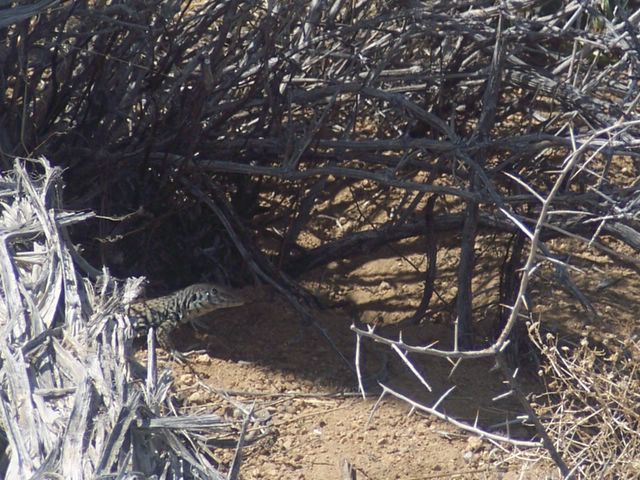
Great Basin Whiptail Lizard (Cnemidophorus tigris tigris) - The whiptail is a slender bodied lizard with a long, whip-like tail. They can grow 8-12 inches in length from head to tail. You can see him in the left-hand side of this photo, near the shadow.

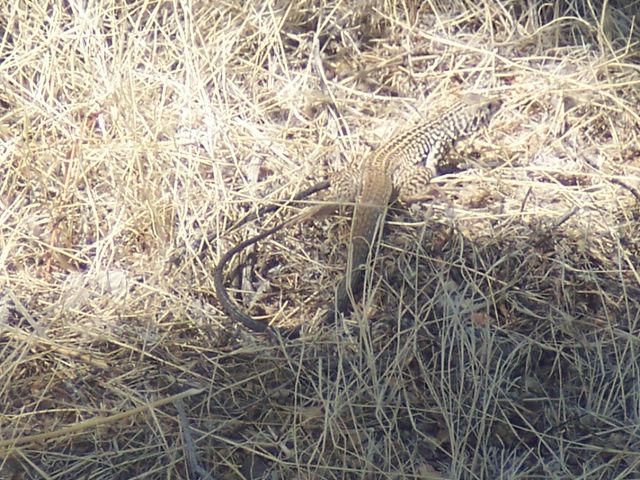
Great Basin Whiptail Lizard - these lizards can run fast. Certain specimens have been clocked at running at speeds exceeding 15 mph for short distances.

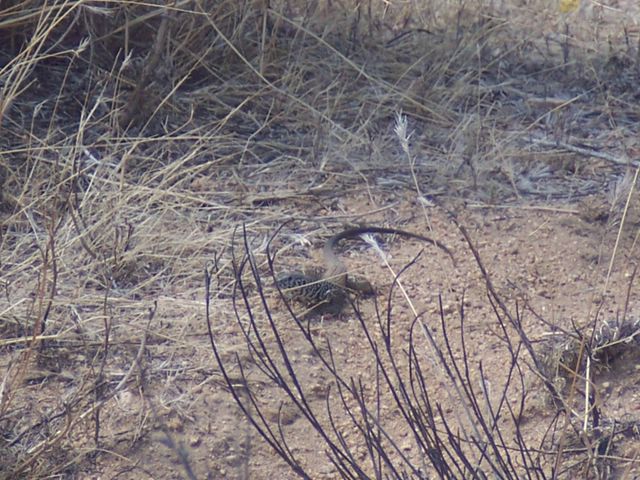
Great Basin Whiptail Lizard - this guy is pretty much in the center of this picture - they are hard to capture in a photo as they run fast from bush to bush and then walk in jerky movements, never really standing still for a moment.

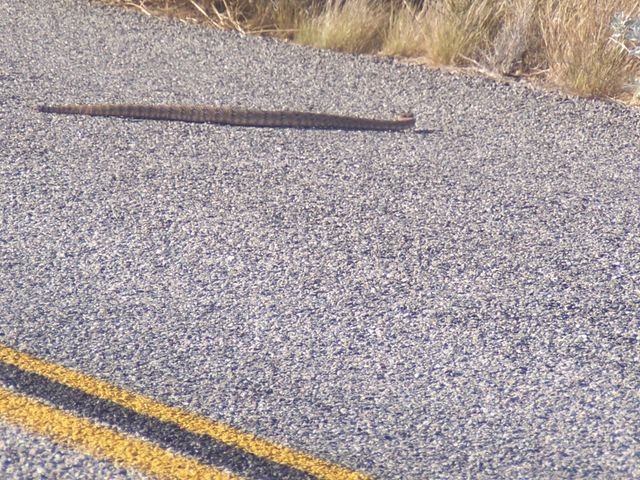
Western Diamondback Rattlesnake crossing the road

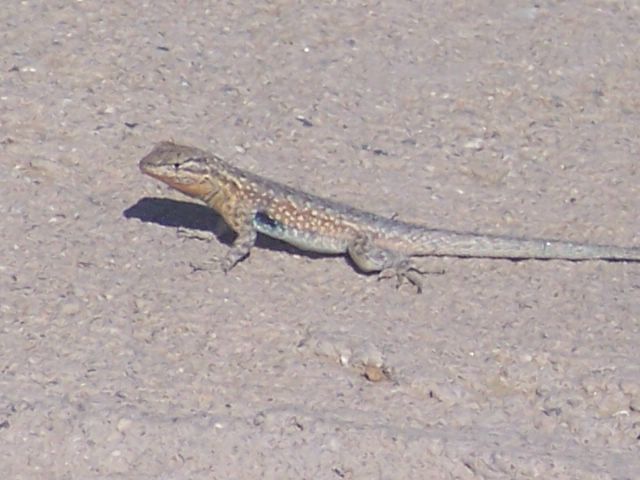
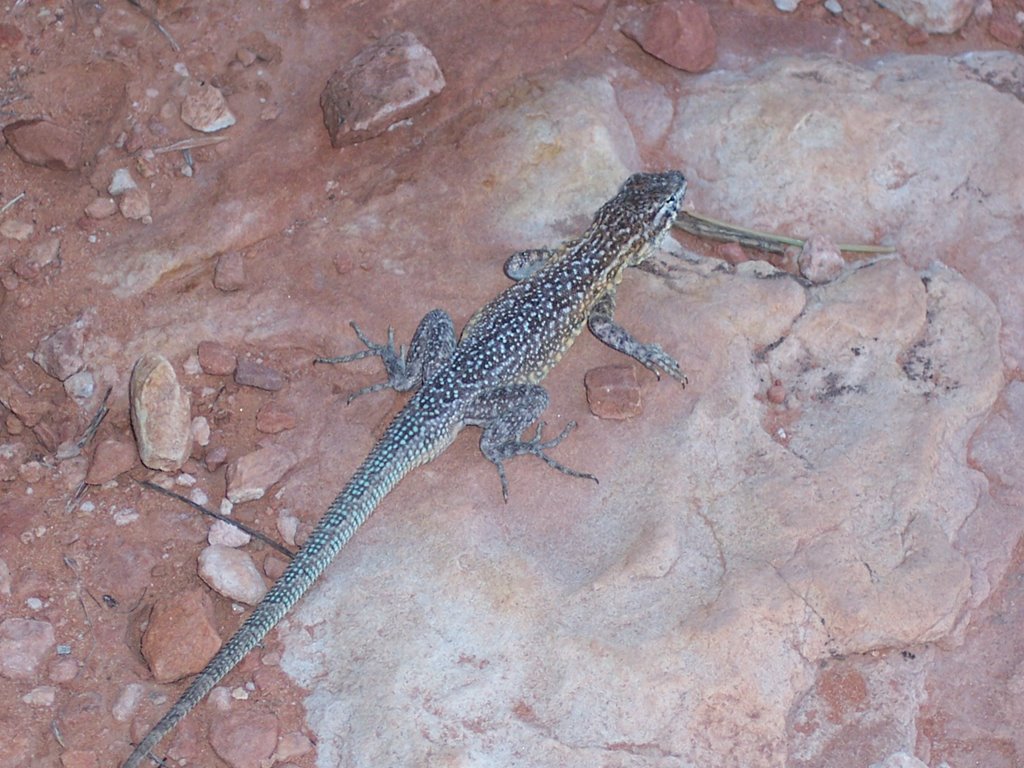
Side Blotched Lizard (Uta stansburiana) - This is probably the most common lizard in southwestern California. It is named for its blue "blotch" of color behind its front legs. They are small, insectivorous lizards.

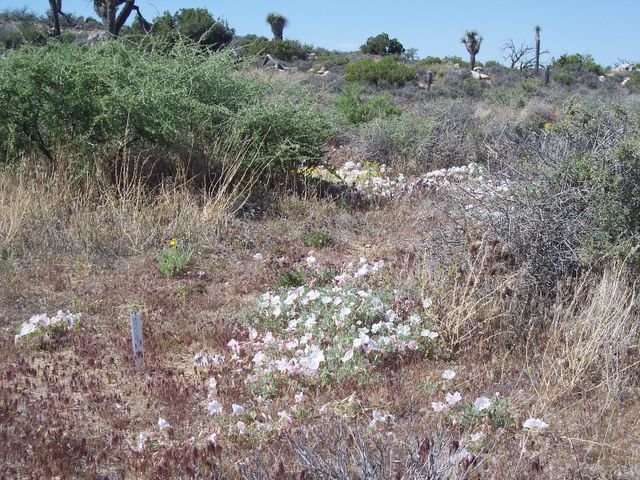
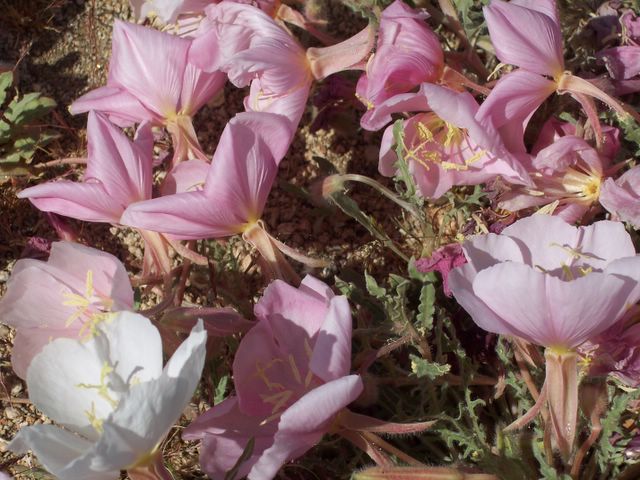
The hills were covered with Dune Evening Primrose and the flowers scented the air with a nice fragrance

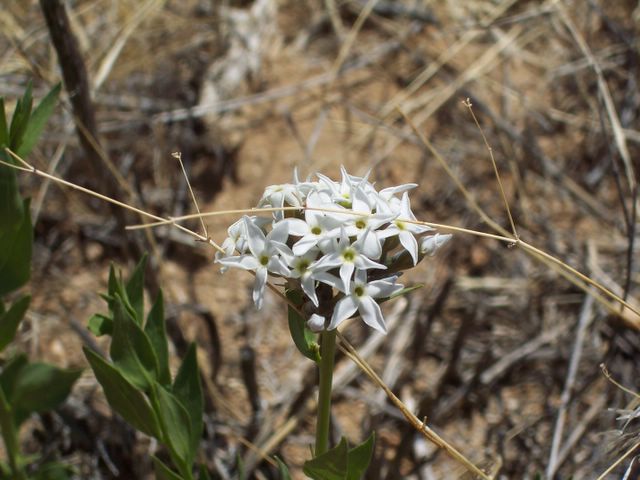
Wooly Amsonia (Amsonia tomentosa) - Paiute Indians used the fibers to make rope, and the milky juice as a laxative

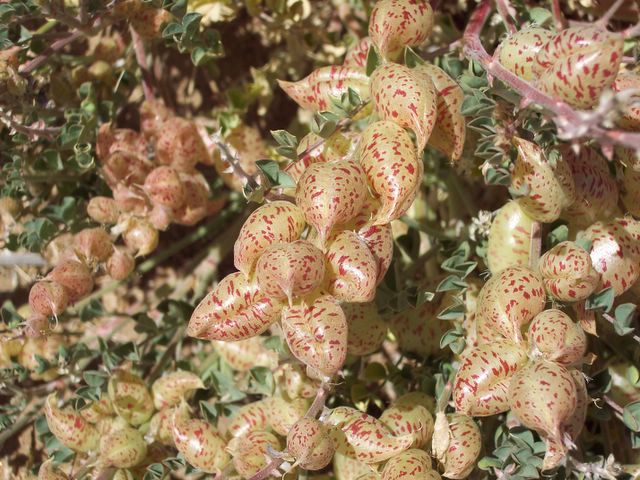
Bladder Pod

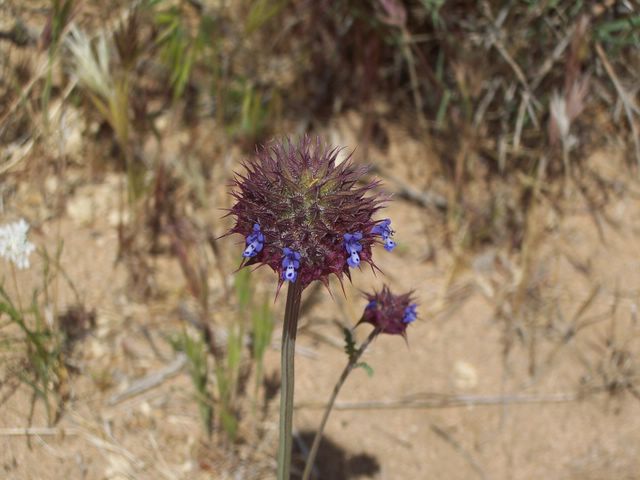
Chia (Salvia columbariae) - Grows in sandy washes and open flats. This plant was an important food source for Native Americans

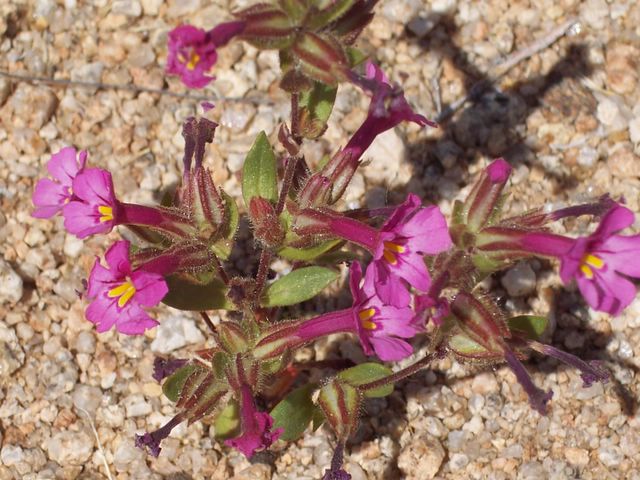
Bigelow Monkey Flower (Mimulus bigelovii) - The 2-parted stigma of this flower will fold up when touched.

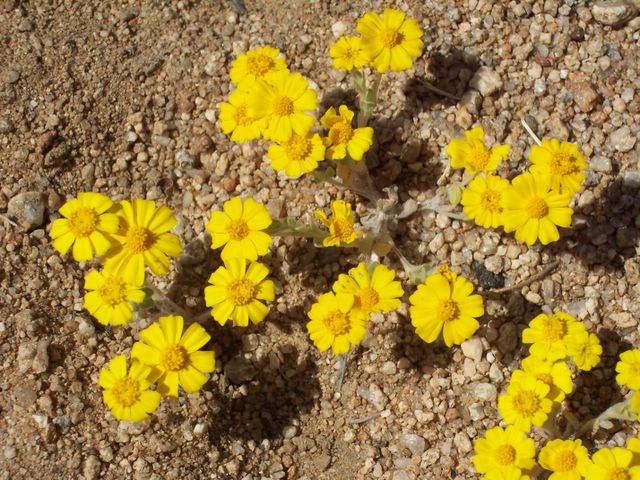
Goldfields (Lasthenia galbrata) - can grow 6-12 inches tall with small, yellow daisy-like flowers.

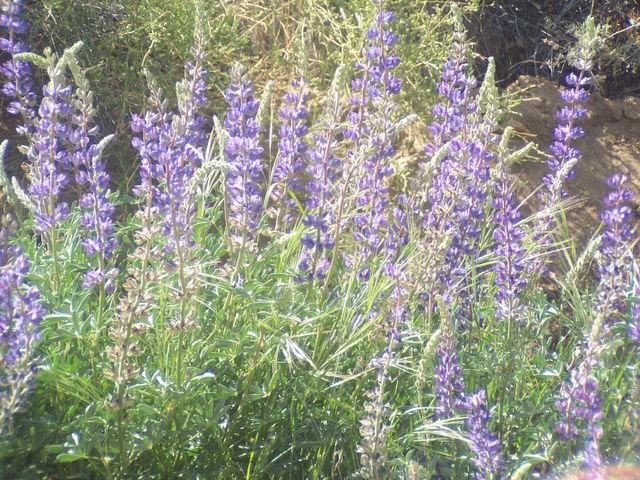
Arroyo Lupine (lupinus succulentus) - tall plants with deep blue-purple flowers, it grows between elevations of 0 - 2000 feet. It is a member of the pea family and blooms between February and May.

Dune Evening Primrose (Oenothera deltoides) - grows in dry washes, sandy flats and on roadsides. The flowers turn pink with age.

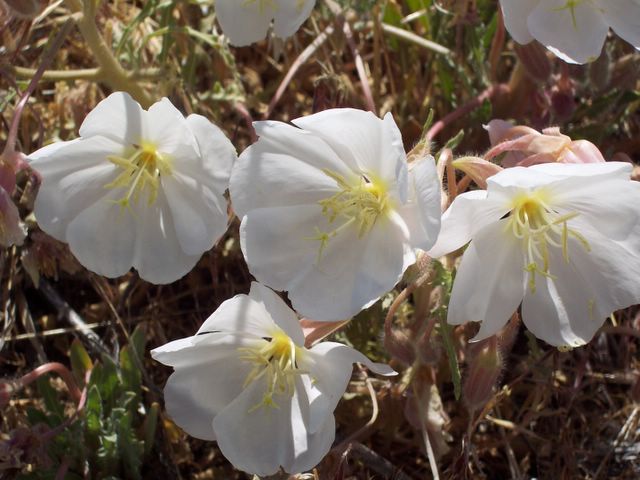
Dune Evening Primrose - White, 4-petaled flowers that turn yellow at the center. The flowers open in early evening and close in mid-morning.

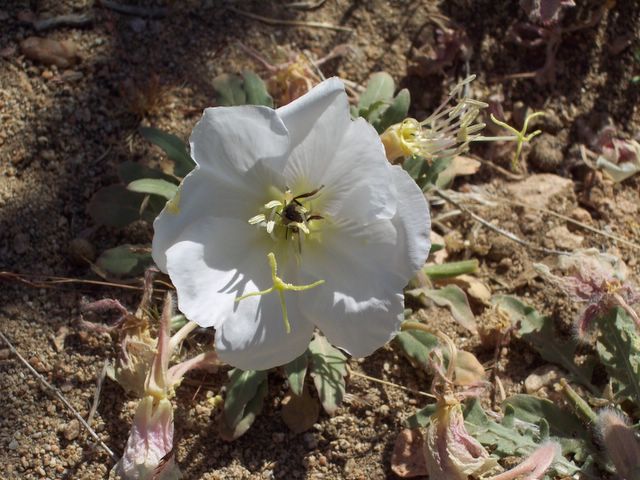
Dune Evening Primrose (with a bee inside)

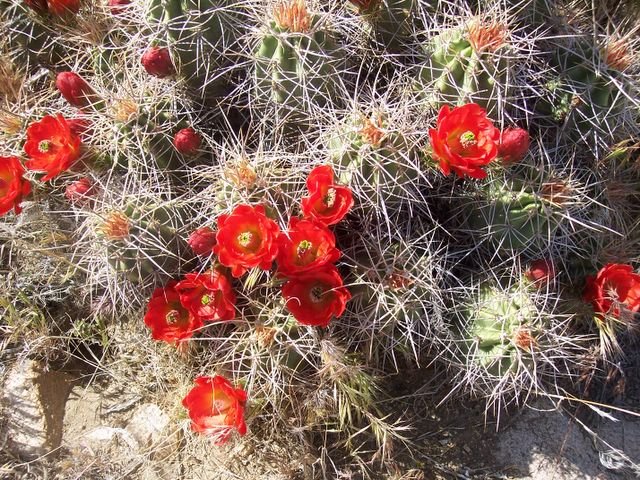
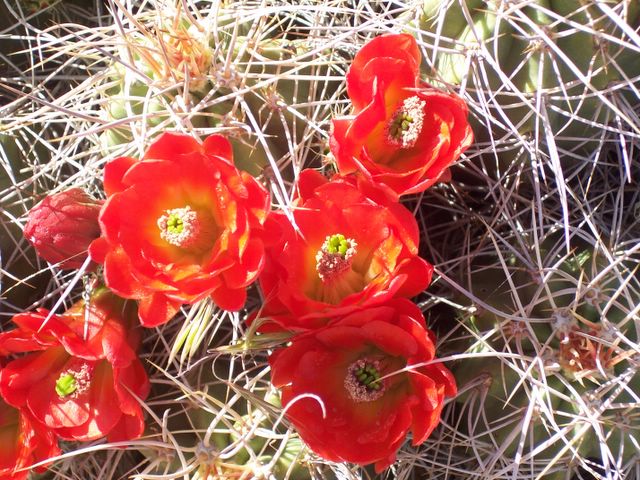
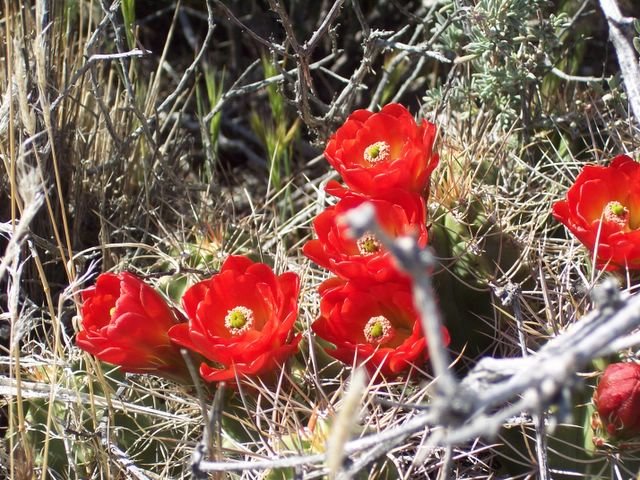
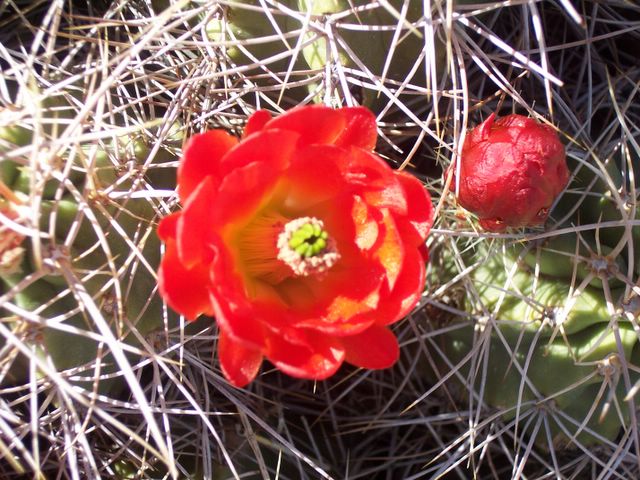
Hedgehog Cactus with blooms - The plant itself is a small, barrel-shaped cactus with 1 - 2 inch long spines.

Hedgehog Cactus blooms (Echinocereus triglochidiatus) - Echinocerens is from the Greek echinos, meaning "a hedgehog," and cereus meaning "a wax taper."

Hedgehog Cactus blooms - This is the first cactus to bloom in the spring. Flowers are scarlet red and bloom from April thru June.

Hedgehog Cactus bloom - the flowers, unlike many other species of cactus flowers, stay open at night. The flowers can last 3-5 days.

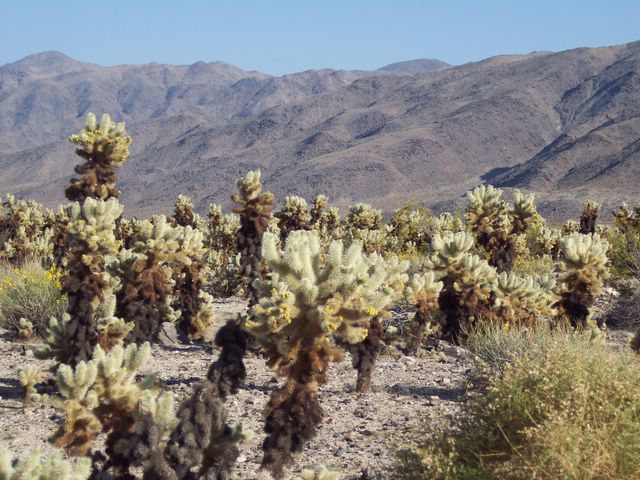
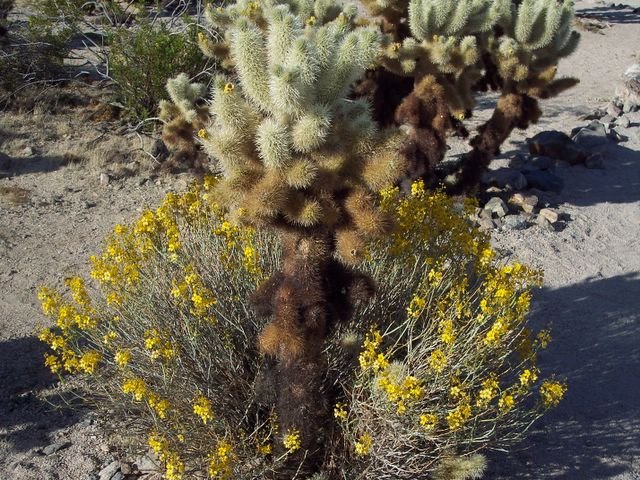
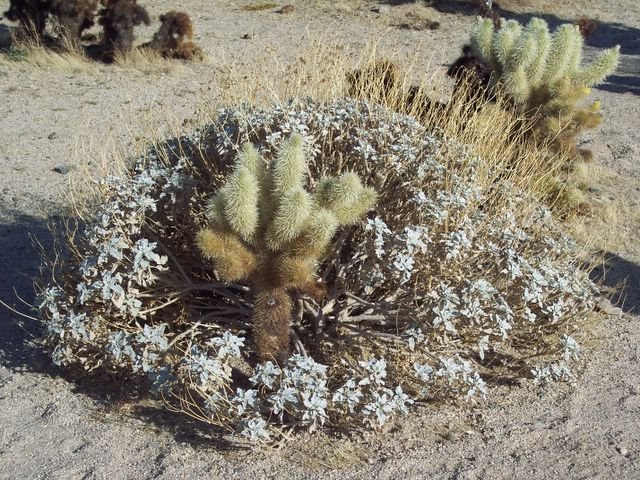
Cholla Garden - located in the eastern part of Joshua Tree National Park, in the Colorado Desert.

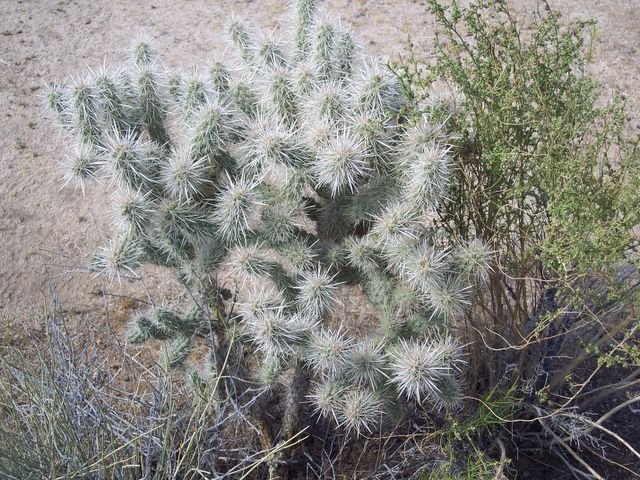
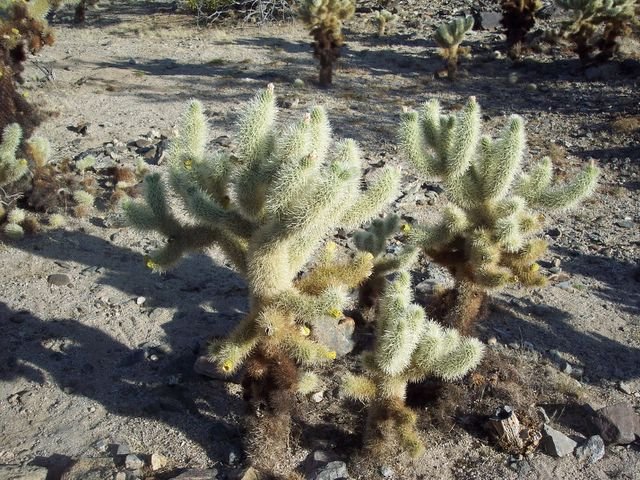
Silver Cholla Cactus (Opuntia echinocarpa) - grows at elevations of 1000 - 5000 feet. Can grow up to 5 feet tall.

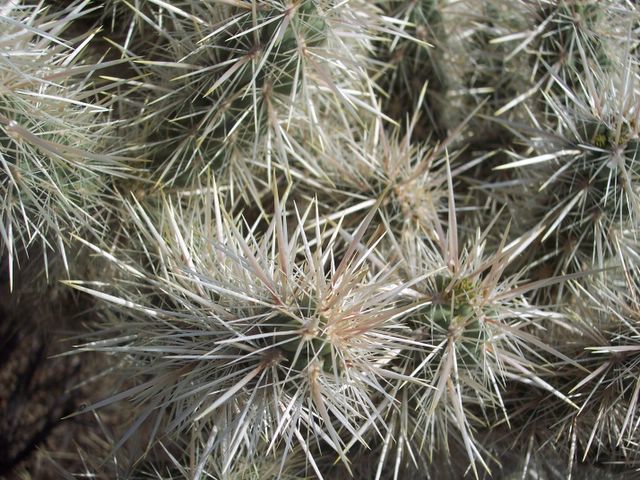
Silver Cholla Cactus (close up)

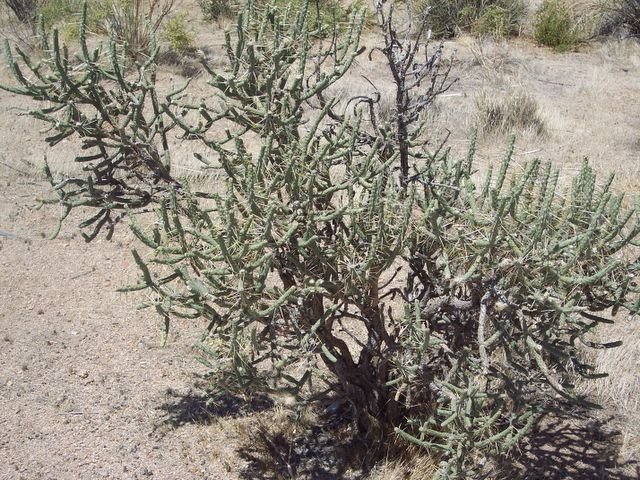
Pencil Cholla Cactus (Opuntia arbuscula) - grows in sandy and gravelly plains, valleys and washes.

Cholla Garden - several types of Cholla Cactus, including Silver Cholla , Teddy Bear Cholla (or Jumping Cholla) (pictured here), and Pencil Cholla can be found in the garden.

Cholla Garden

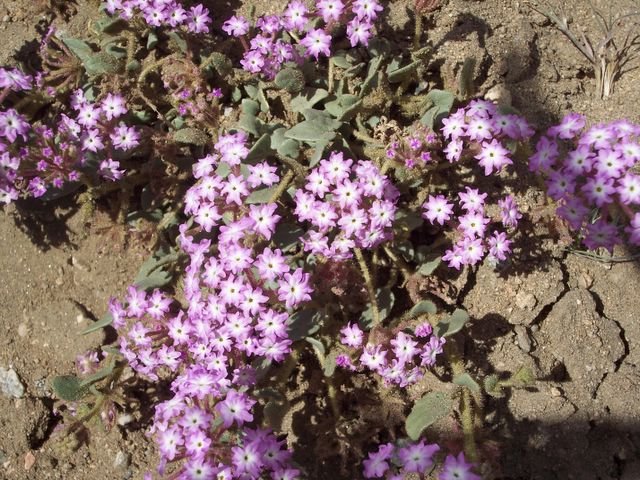
Sand Verbena (Abronia villosa) - Native Americans used this plant to reduce swelling and stop pain in burns.

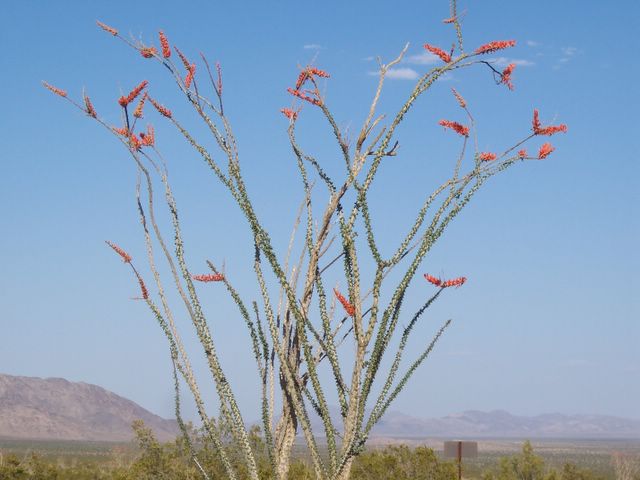
Ocotillo (Fonquieria splendens)

A desert plant that grows in open, stony well-drained desert slopes below 5000 ft.

Cholla Garden in Joshua Tree National Park

Cholla Catus at the Cholla Garden

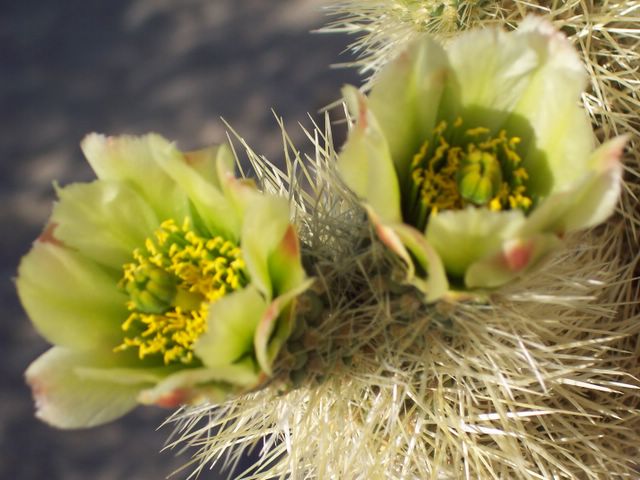
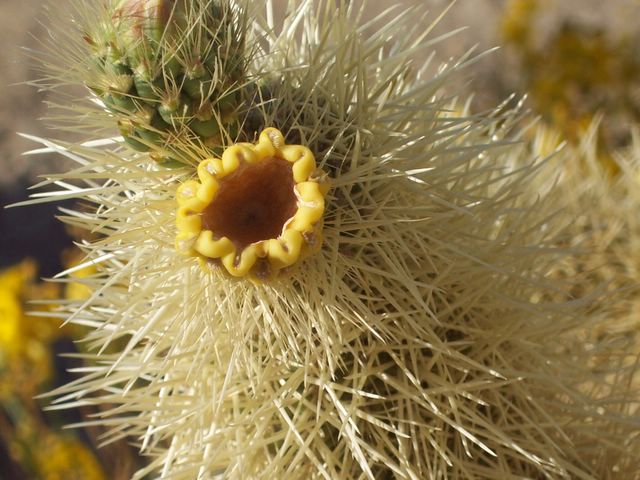
Silver Cholla Cactus blooms

Cholla Cactus

Creosote Bush (Larrea tridentata) - This plant is the most characteristic feature in North America's hot deserts. It is a hardy plant that tolerates arid conditions and aggressively competes among other plants for water.

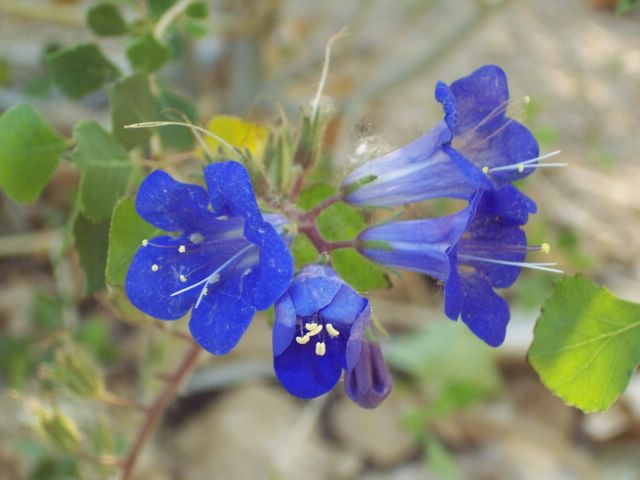
Desert Bluebell (Phacelia campanularia) - Blooms February thru April and grows in sandy or gravelly areas.

Ocotillo (close up)

Ocotillo (Fonquieria splendens) - Grows in open, stony, well-drained desert slopes below 5,000 feet. Flowers bloom March thru June or later, depending on rainfall. They can grow up to 20 feet tall.

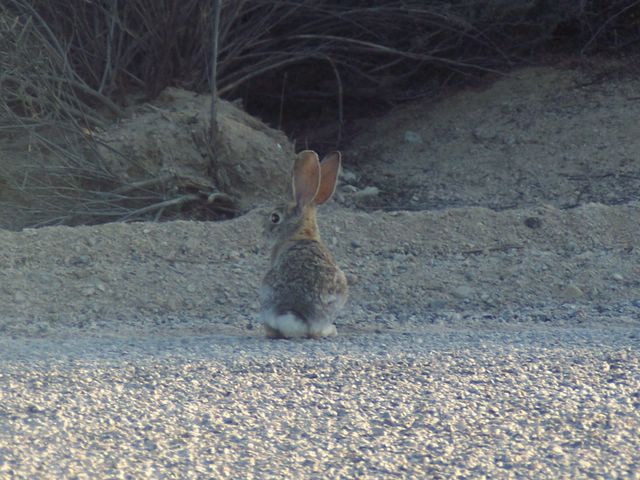
Cottontail Rabbit - near Cottonwood Spring

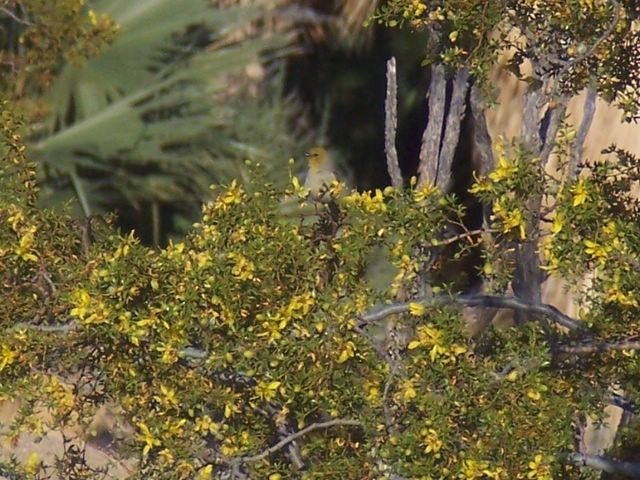
Creosote bush at Cottonwood Spring - look close and you can see a Verdin (a grayish bird with a yellow head) perched in the bush (he is toward the upper-center of this picture - kind of hard to see since he blends in so well with the bush)

Cottonwood Spring - Joshua Tree National Park (you can see my shadow in the bottom left side of the photo - lol)

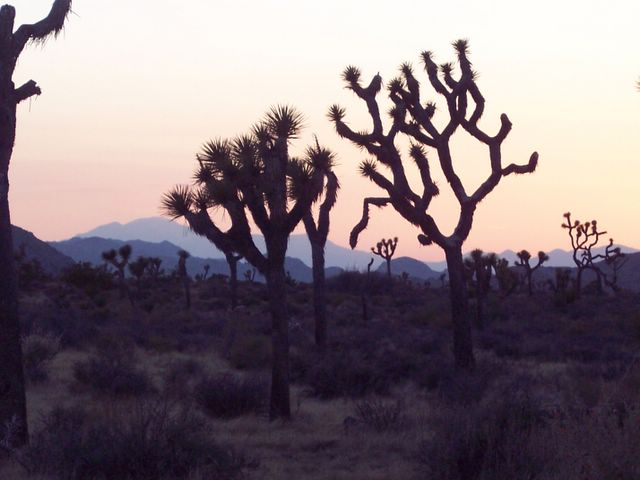
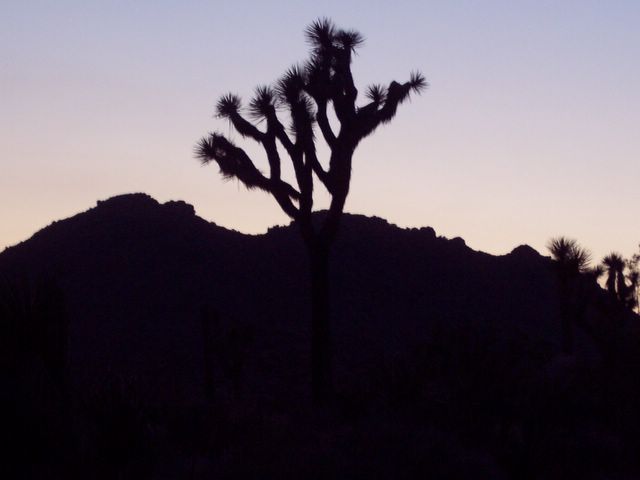
Sunset at Joshua Tree National Park

Joshua Tree National Park at sundown

Monday, May 01, 2006

Red Rock Canyon, NV and Valley of Fire State Park

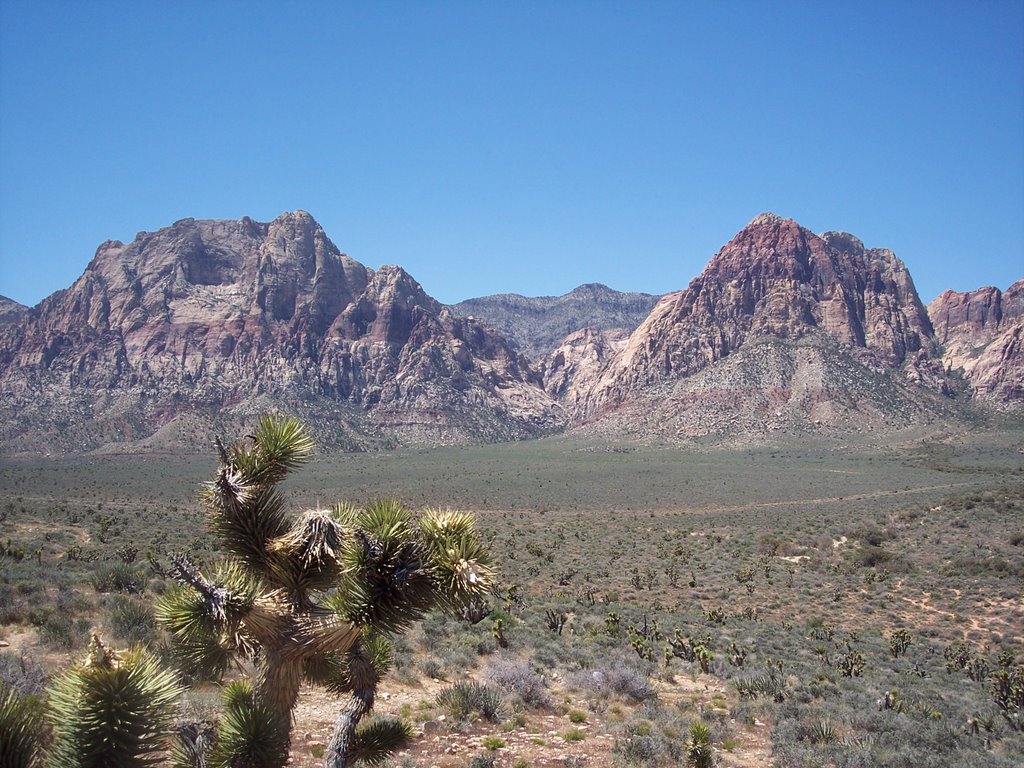
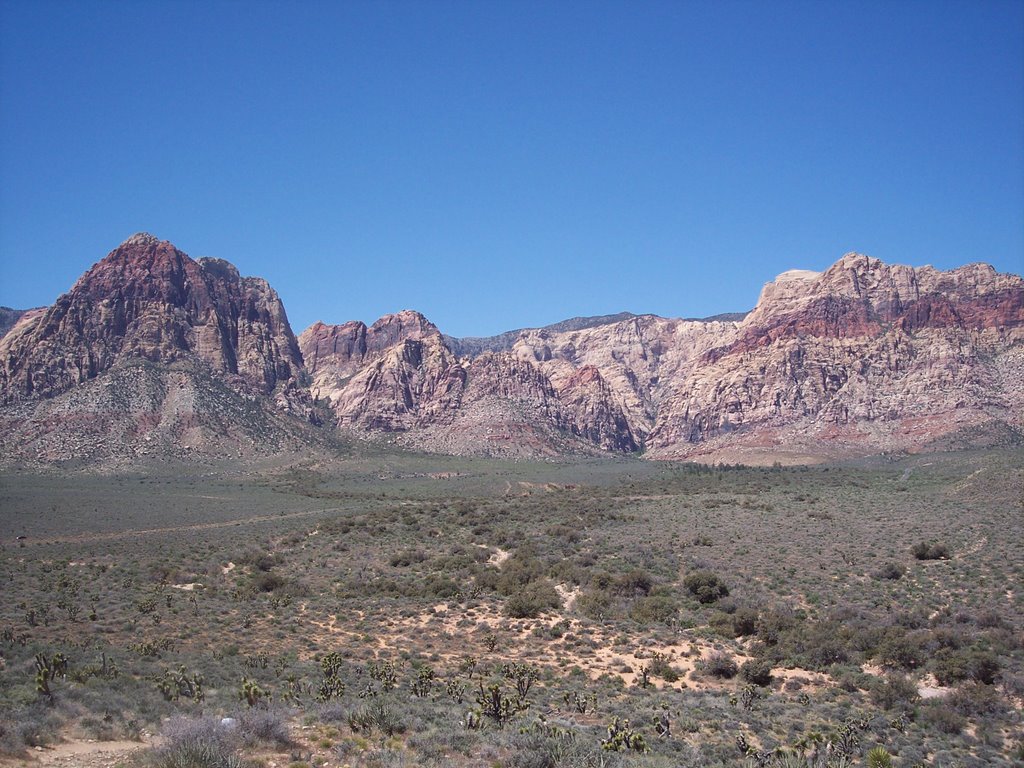
Over the weekend, I went to Red Rock Canyon National Conservation Area and to Valley of Fire State Park in Nevada. Both of these places are near Las Vegas. To get to Red Rock Canyon, you can take the Blue Diamond exit off of the I-15. There was construction going on, so the drive to the canyon was slow. But the drive in the canyon itself was nice and smooth and easy-going. Just at the fork in the road where you turn right to go to the canyon, we spotted 2 wild burros walking along the fence line. The scenic loop drive is a nice drive of about 11 miles which takes you along several stopping points of interest and trailheads for hiking. It is a fee area, but it only costs $5 per vehicle. The Children's Discovery/Lost Creek trail is a nice, scenic trail and a fairly easy one at that, which is suitable for children, although in some spots some rock scrambling is necessary. Bring hiking shoes and a hat, because a lot of the trail is exposed. There are areas of shade here and there, too. A nice little creek runs though the trail and sometimes, a waterfall is flowing. This time of year, the waterfall was more like a shower than an actual fall, but a waterfall is not something you really expect to see in a desert anyway. There are wildflowers in the spring and a lot of lizards running here and there, as well as many birds and small mammals, such as rabbits and chipmunks.

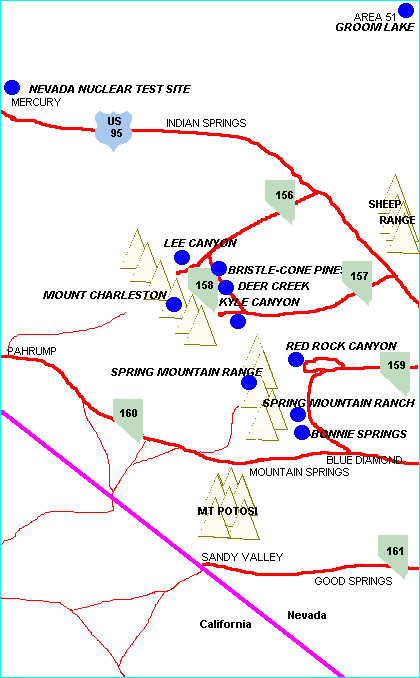
We also went up to Kyle Canyon, which takes you near Mt Charleston, the highest peak in Nevada. The landscape is quite different up there, as there was still some snow on top of the mountains. The road takes you up over 8000 feet in elevation, so it is quite cooler up there than below in Red Rock Canyon. Also accessible in Kyle Canyon, is a side road which takes you to Lee Canyon. On the way back down to highway 95 from Lee Canyon, there was quite a display of desert wildflowers on the side of the roadway, including beavertail cactus, desert marigold, desert globemallow and mojave aster. The Joshua Tree, creosote bush and yucca are also common plant life here.

The next day, it was off to Valley of Fire State Park. This park is the oldest state park in Nevada. It is also a fee area, but is only $6 per vehicle to enter, and SO worth it. The views are awesome. There are times when you feel like you are on another planet. The grounds are covered with spectacular red sandstone formations, carved into fascinating shapes by the wind and rain. The area was covered with wildflowers and other desert plant life, such as barrel cactus, yucca, indigo bush, and desert sunflowers. Wildlife in the park is abundant, but a lot of the species are noctural, such as bats and scorpions (if you had to live in the desert, you'd be noctural, too. It is HOT in the daytime). The chuckwalla, a large lizard often found basking in the sun, is diurnal, meaning active day and night. We did spot some desert bighorn sheep on the way into the park. They typically like the rocky cliffs, but these guys were basking in the shade on a slope of a hill. There are several points of interest and numerous picnic areas and trails to hike on, as well as a Visitor Center. Be sure to bring sunscreen, plenty of water, hiking shoes and a brimmed hat, because many trails, such as Mouses Tank, are very exposed with little or no shade. The weather is mild in the winter and fall, but is very hot in the summer, with temperatures reaching 100-120 degrees f. It was the end of April when we went and the temps were already in the 90's. There are no food services in the park, but there are a few coves on Lake Mead about 10-30 miles away that have small cafes or stores, as well as gas pumps (but you will pay out of the nose for gas there, so gas up before you go in). There are also 2 campgrounds, Arch Rock Camground and Atlatl Rock campground, within the park if you plan to stay overnight. Atlatl Rock campground has flush toilets, water spigots, hook ups for RV's and showers.
We also stopped at Hoover Dam before we left for home, since it wasn't very far away from the park. It was typically busy, since it is a popular tourist attraction and there was construction going on. Be prepared for traffic delays until 2008 when the construction is going on. Also, there is a security checkpoint, which all vehicles are subject to (they just waved us thru though). No semi trucks or commercial buses with luggage are allowed on the dam. Parking in the parking lot is $7. There are some tours you can go on, but you have to purchase tickets for these.

The trip was fun, but I was very, very tired and VERY hot when I left. The drive home took forever, as there were a few accidents which caused major delays. The normal drive from Bakersfield to Las Vegas is about 4 1/2 hours. I think it took nearly 6 hours to get home. By then, I was beat! I posted lots of pictures below, so enjoy!


Links:

Wildflowers of The West
Valley of Fire State Park Official Site
Valley of Fire
Red Rock Canyon, NV
Red Rock Canyon National Conservation Area
Hoover Dam
Lake Mead National Recreation Area
Lake Mead
Kyle Canyon/Spring Mountains

Sunday, April 30, 2006

Red Rock Canyon Conservation Area, NV


Side Blotched Lizard (Uta stansburiana)
These are the most common California desert lizard species.
The males are more colorful than the females. This one is a male.

The Red Rock Canyon National Conservation Area is a 197,000 acre area managed by the Bureau of Land Management. It is located about 12 miles west of Las Vegas, accessible by Blue Diamond Road.